
User Story: From Faster Simulations to Faster Cars UGent Racing
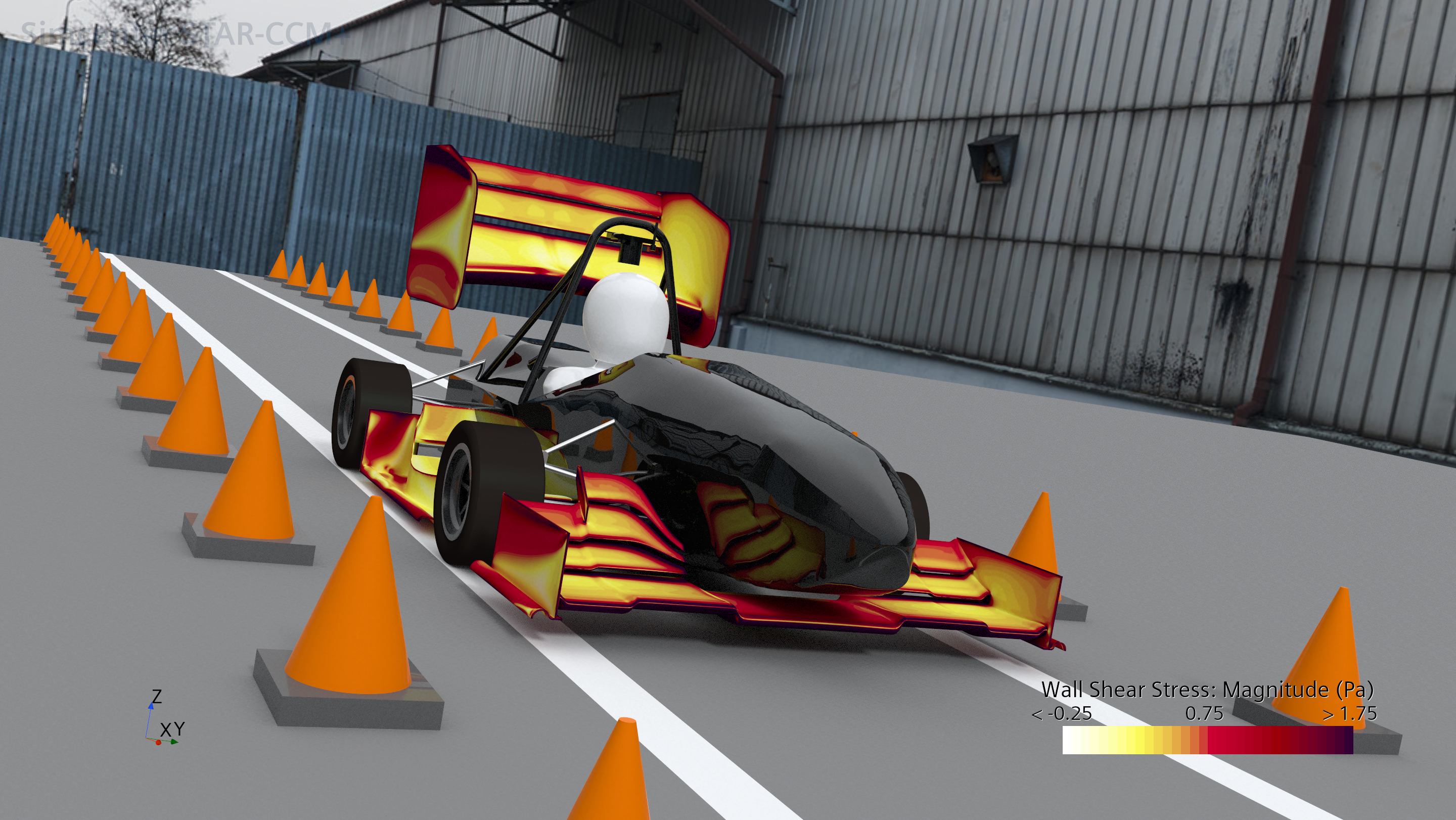
Building the Next Generation of Autonomous Racing Cars
UGent Racing is a multidisciplinary group of over 95 full-time students who design and build an autonomous electric race car each year. During the summer, they compete in Formula Student competitions, which are among the most prestigious engineering contests. These competitions not only evaluate the car's speed but also assess the team's technical knowledge and skills. Events are held internationally, including at the Hockenheimring in Germany and the Red Bull Ring in Austria, where more than 2,000 students typically participate.
Senne Evenepoel (22) is a Master's student in Business Engineering at Ghent University and Team Captain for UGent Racing. Senne: “I was seeking an extra challenge alongside my studies when UGent Racing introduced themselves in one of my lectures. I was convinced that it was an incredible project I wanted to join, not only for the skills and experiences it would offer, but also for the opportunity to contribute. As team captain, it is my role to ensure that we provide the technical teams with everything necessary to meet all deadlines, while also considering the short- and long-term organisational aspects of the team.”
Senne: “In our project, technology and collaboration are tightly integrated across design, simulation, manufacturing, testing, and race operations. Internally, aerodynamics, chassis, powertrain and suspension work in shared Computer-Aided Design (CAD) and data environments to maintain consistent geometry, wiring, and control interfaces. Version control and issue tracking keep changes traceable and fast. Externally, industry partners review our designs, provide process know-how, and help us validate materials and manufacturing methods, accelerating learning and raising reliability.”
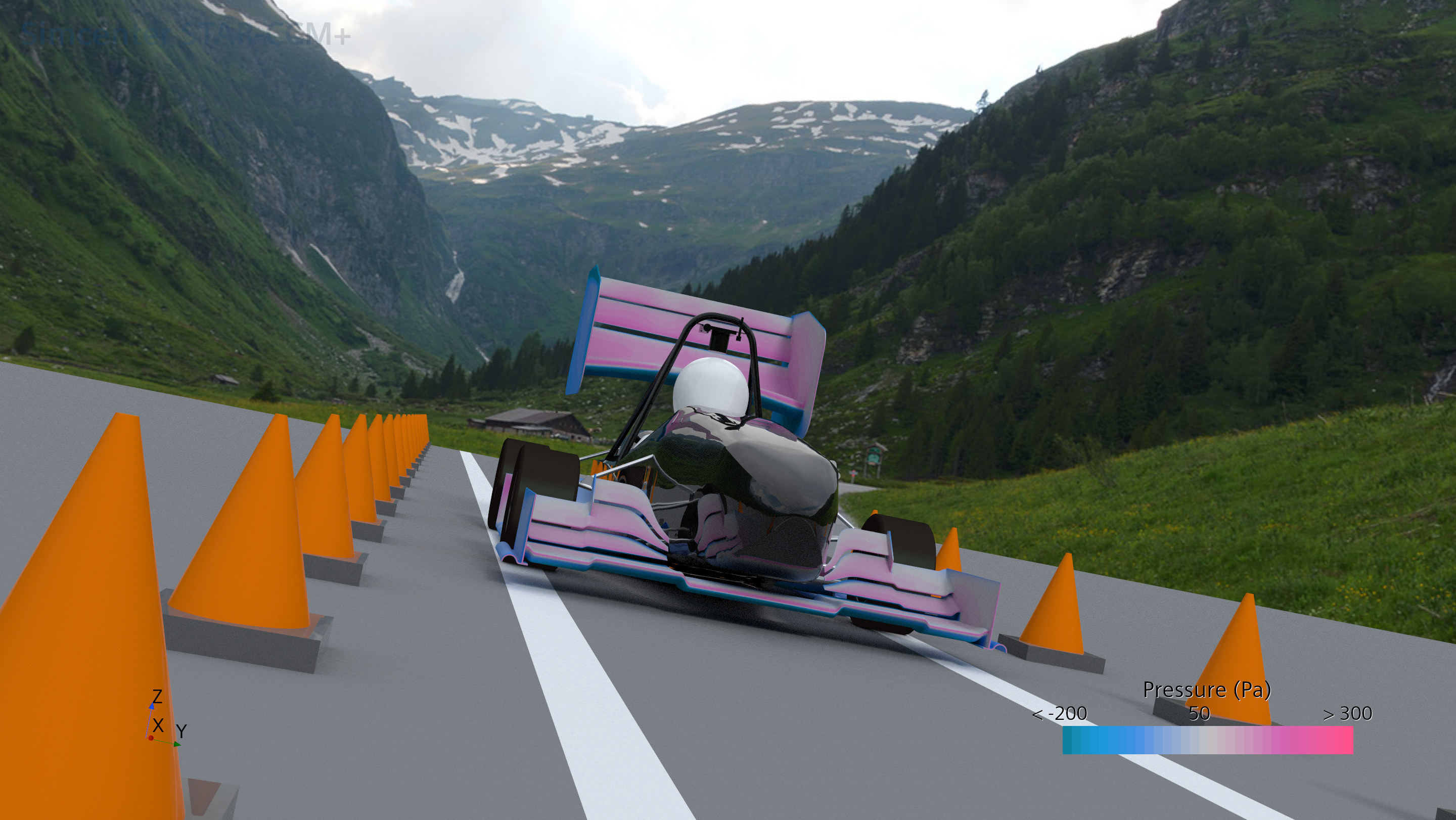
Embracing High-Performance Computing in Student Racing
When UGent Racing began its research into computational aerodynamics three years ago, it quickly realised that its local laptops were unable to handle the computing power needed for Computational Fluid Dynamics (CFD) and Multidisciplinary Design Optimisation (MDO) simulations.
Arthur Leoen is a full-time master's student in Mechanical and Electrical Systems Engineering. As the Head of Aerodynamics in the team, he leads the design, simulation, validation & integration of the entire aerodynamic package of the 6th-generation car.
Arthur: “Large-scale simulations, such as computational fluid dynamics (CFD), cannot be performed on a regular computer due to insufficient RAM. Generally, a CFD simulation with 1 million cells requires 2-4 GB of RAM. Therefore, a simulation with 37 million cells would require approximately 74-148 GB of RAM. Since typical desktop computers usually have 16-32 GB of RAM, they cannot meet these requirements. Additionally, large-scale CFD simulations demand multiple processor cores operating in parallel. Most standard desktops come equipped with only 4 to 8 CPU cores, which is inadequate for this task. As a result, running a single simulation could take nearly a week.”
To address this issue, the team concluded that exploring High-Performance Computing as a solution was necessary. With no prior experience in this field, they investigated how to implement supercomputing at UGent Racing and quickly collaborated with the Vlaams Supercomputer Centrum (VSC), which provided support.
Arthur: “Since we’ve been setting up our software on the VSC infrastructure, we were able to run our full-car simulations consisting of 37 million cells without getting memory errors. Most simulations with a lower cell count are at least 10 times faster than our own laptops, which saves us an insane amount of time for all of our simulations combined!”
Accelerating Design Through High-Performance Computing
The team uses several software programs to design the car. Arthur: “We utilise three software programs: Simcenter STAR CCM+, Simcenter HEEDS Connect Systems MDO, and Siemens NX batch, which runs in the background. First, we design our CAD parts in NX locally and set up our simulation environment in STAR CCM+. When it’s time to run the computations, we upload the simulation file to the HPC infrastructure. Here, we run the simulation, then check the results and utilise our MDO software. Here, we’ll plug in our parametrised CAD part, our simulation file, set parameter ranges, and generate reports from the simulation file, letting the MDO software handle the rest. Once this is finished, we have an optimal design of our component.”
Arthur: “Having access to VSC allows us to deliver fully optimised aerodynamic parts. Without this access, our design phase would rely on just a few manual optimisations, which wouldn't fully unlock the potential of our aerodynamic package. Access to VSC provides us with an efficient workflow: faster iterations lead to optimised designs, which result in improved aerodynamic performance, ultimately enhancing overall vehicle performance.”
Engineering Impact Beyond the Track
UGent Racing is a fast-growing group focused on sustainability, the practical application of theory, and the promotion of STEM education. They engage in various sustainability projects, such as analysing emissions and developing a wooden steering wheel to replace a carbon-fibre one. This year, they aim to recycle PET bottles for 3D printing. As a side project, the team is also looking into converting an electric race car into a hydrogen combustion model. To inspire younger students, they organise monthly workshops in collaboration with organisations such as TAJO, empowering youth from vulnerable backgrounds to enhance their prospects and promote equal opportunities.
From Student Team to Professional Career
The experience gained from UGent Racing also provides the students with valuable lessons for their future professional lives. Senne: “By simply being part of the team, we learn how to work in a business-like environment where we have responsibilities, as well as the opportunity to collaborate with a diverse group of students. Additionally, we prepare the team by organising workshops that focus on professional job applications, effective pitching during our events and competitions, and team management. Lastly, we connect them with over 50 companies that support our project. This way, they create a network and receive offers from companies that have the same values and goals as UGent Racing.”
The experience within the team has taught Arthur, as an engineer, valuable skills that will benefit him in his future professional life. He states:
“In addition to acquiring the technical knowledge needed to work with a high-performance computing (HPC) infrastructure, I’ve learned how HPC impacts vehicle design. I collaborated with our contact person to ensure everything was properly set up, which made clear communication during the debugging phase critical. As a result, I also learned how to communicate effectively about technical issues, both within the team and with external stakeholders.”
Looking Ahead: Performance, Innovation and Growth
As to how they see the future, Senne replies: "The team has great potential to improve year after year and begin competing with the best teams. We are still a very young team with a long way to go, but we have demonstrated that we possess the knowledge necessary to build exceptional race cars."
According to Arthur, the future of CFD and simulation technology for race cars is rapidly advancing through GPU acceleration, AI integration, cloud computing, and high-fidelity multi-physics simulations, enabling faster, more innovative development and making it accessible to all teams. Digital twins and real-time simulation workflows are becoming standard, enabling virtual prototyping, advanced optimisation, and precise control over aerodynamics and vehicle design.
VSC Empowering the Next Generation of Engineers
Senne and Arthur both reflect on their experiences with VSC, emphasising the profound impact it has had on their growth as innovators.
Senne: “For us, it’s not just about racing, it’s about innovation and learning. Having access to HPC gives us the tools to test our ideas and push technology forward.”
Arthur: “VSC helps student engineers turn ideas into performance. This is where the next generation of innovators begins.”
Senne Evenepoel
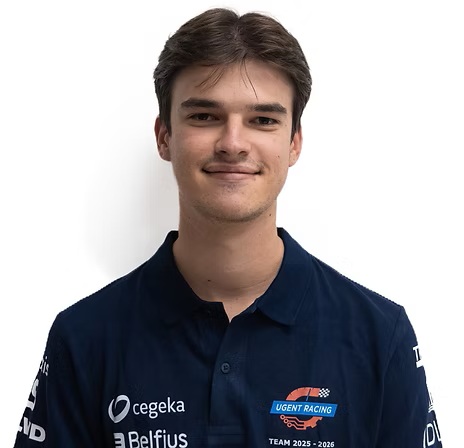
Senne is 22 years old and a master's student in Business Engineering at Ghent University and the Team Captain of UGent Racing.
"I’m proud of our team’s rapid growth, not only in racecar performance but also in creating remarkable experiences beyond car manufacturing. Working in an innovative environment and showcasing our achievements at prestigious racetracks across Europe is truly rewarding."
Arthur Leoen

Arthur is 21 years old and a full-time master's student in mechanical and electrical systems engineering at UGent and also the Head of Aerodynamics of uGent Racing.
"I’ve been interested in F1, and specifically aerodynamics, since I was 16 years old. At that time I didn’t know aerodynamics consisted of a lot of computational power, but since I joined UGent Racing, I learned a lot about aerodynamics in general and more specifically in the computational fluid dynamics (CFD) side of aerodynamics."