
HPC as Growth Enabler in the Start-Up Landscape

In Belgium, the Walloon research centre Cenaero and the Vlaams Supercomputer Center (VSC) drive the use of HPC within the industrial landscape of their respective regions by providing access to top-notch local supercomputing infrastructure and technical support.
Belgium’s Innovation Landscape
Belgium has a vibrant private sector that encompasses a wide range of industrial domains, including, amongst others, life sciences, chemicals, food, logistics, information and communication technology (ICT), and finance. Alongside major multinationals, innovation-driven small and medium-sized enterprises (SMEs) and start-ups play a crucial role in the Belgian economy. In this regard, it is assumed that the Belgian SME ecosystem comprises more than 90% of all companies in the country. In this competitive, innovation-focused environment, start-ups face constant pressure to turn their ideas into market-ready solutions quickly. High-performance computing (HPC) can serve as an invisible growth accelerator in this process, transforming what would typically take months of computation into mere days.
The Start-Up Reality Check
Xavier Deraet is a business developer at VSC. In his experience, SMEs can be classified by their level of HPC awareness. The first group is generally well-informed about the advantages of HPC. This group typically involves university spin-offs led by founders or CEOs who have prior experience with HPC infrastructure during their PhDs or Postdoctoral work. They already rely on HPC for their daily operations, yet remain unaware of the availability of national providers and European systems. They might even have their own expensive infrastructure up and running, or might be using big cloud providers such as Amazon Web Services (AWS), Google Cloud or Microsoft Azure. The challenge here is making them aware of local, more affordable providers. The second type are companies that know HPC but are apprehensive about it because they perceive it as complex, costly, or “frightening.” They often believe they do not need HPC until it is explained to them.
Xavier Deraet (VSC): “One of the most common misconceptions start-ups have about supercomputing is 'a supercomputer is too big for our purposes’. Companies think that to be eligible to use our infrastructure, they should run large amounts of simulations or train extremely large LLMs. This is not true. A supercomputer becomes beneficial for anyone as soon as finishing a given computing task on a laptop requires multiple hours and days.”
Supercomputing as a Game Changer
Benoît Dompierre, head of the Belgian National Competence Center and HPC consultant at Cenaero: “The value of HPC for start-ups and SMEs lies in its ability to enhance productivity and efficiency, thereby reducing their time to market. This capability is crucial as it leads to faster research and development cycles, smarter prototyping, and increased credibility when presenting to investors.”
Xavier: “Many companies that invested in their own servers face challenges like a lack of maintenance expertise, high hardware costs—especially for SMEs—and inefficiencies from irregular usage patterns. Transitioning to local systems from VSC or Cenaero offers significant advantages: companies avoid hefty financial investments, eliminate the need for in-house maintenance, and benefit from state-of-the-art systems that reduce queue times and enhance production efficiency.”
Removing the Fear Factor
VSC and Cenaero also strive to lower the threshold for companies to utilise supercomputing in terms of cost, expertise, or access. At Cenaero, costs are relatively low and transparent. Benoît Dompierre: “We always offer a free test to ensure the supercomputer meets a company's needs. Basic support is free. We can also provide paid expert support when needed (e.g., software installation, setting up a virtual environment dedicated to the company, etc.). Additionally, we have an "open on demand" portal, which provides graphical access to LUCIA through a web browser, allowing you to perform all classic tasks.”
Xavier Deraet (VSC): “Access to the VSC cluster is effortless and requires only a few preliminary administrative tasks. You are usually granted access within a week. More experienced users can connect to the cluster using the terminal and associated SSH command line. Beginners can use the web-based access, which allows them to start their jobs simply by clicking and transferring data by dragging and dropping.”
VSC offers a free 4-month exploratory access period to any new stakeholder first. This allows them to perform small proof-of-concept experiments and benchmark the suitability of the infrastructure for their code/software. Hence, by the time a company shifts to a regular pay-per-use contract, the cluster's usage for their application should be fully optimised.
Besides local infrastructure, SME’s can also turn to European infrastructure. The EuroHPC JU offers various programs to promote the use of HPC across the continent. Access to these EuroHPC supercomputers is available for research, development, and innovation purposes upon submission of a project proposal. Moreover, the EuroHPC JU also provides SMEs with funding through either the “Business Experiments call” or “Innovation Studies call” of the FFplus project.
Proof in Practice
The Leuven-based start-up Raidyn develops an AI-powered inspection system for steel cables; critical yet often “invisible” components in elevators, bridges, cable cars, offshore platforms, and more. Their goal is to detect hidden defects before they become dangerous risks.
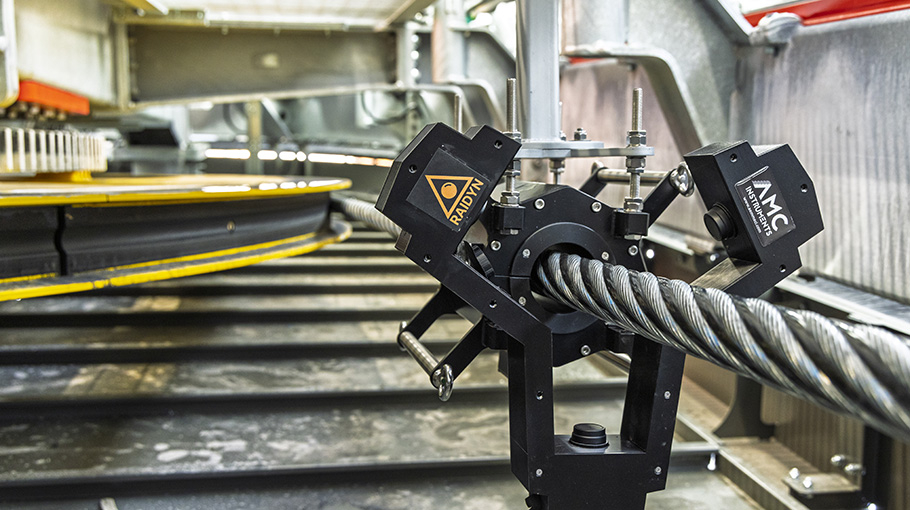
Tommaso Tamarozzi (CEO Raidyn): “Thanks to the VSC and the great support we received, we scaled up our AI training capabilities without having to resort to unreasonable budgets.”
Advancements in materials science are crucial for technology sectors such as batteries, photovoltaic devices, catalysts, and transparent conducting oxides. Utilising numerical simulations and machine learning, Matgenix accelerates the search for optimal materials by virtually testing them before expensive experimental validation. Matthew Evans notes that the specialised computing hardware in Walloon's 'Lucia' machine and Europe’s Tier-0 machine LUMI enables the study of thousands of materials daily, facilitating rapid idea iteration and comprehensive materials sampling.

David Waroquiers (CEO & co-founder Matgenix): “In a society shaped by constant change and formidable challenges, supercomputing emerges as a vital force for innovation. Industries and society can overcome obstacles and drive progress by harnessing the power of supercomputing.”
Looking Ahead: The Future of HPC
As to how supercomputing will evolve for start-ups in the future, Benoît Dompierre sees AI as the main driver: “The clear advantages of AI implementation for business development have already been demonstrated many times over. It is therefore to be expected that increasingly more start-ups will seek to implement AI as a standard feature of their business model. Training these applications or rolling them out undoubtedly goes hand in hand with the use of HPC infrastructure. The low pricing rate of our computing infrastructure, whether it’s VSCs, Cenaero’s, or EuroHPC’s, allows these start-ups to use our tools right from the start, i.e., when revenue streams are low, enabling them to grow much faster and at a lower cost.”
Embrace the Potential of HPC
For start-ups and SME’s, the message is clear: if your laptop can’t keep up with your ambition, it’s time to try high-performance computing (HPC). This powerful technology can elevate your projects and help you achieve your goals. Don’t let limitations hold you back; let us embrace the transformative potential of HPC and unlock your potential today.
Discover more inspiring stories via https://www.enccb.be/IndustryUseCase.
Get in touch with EuroCC Belgium via https://www.enccb.be/contact
Other relevant links:
More information about access to VSC: https://www.vscentrum.be/vsc4business
Please note that as of 27/02/2026, Xavier no longer works for VSC because he is persuing another professional challenge.
For all inquiries concerning HPC, please get in touch with VSC via compute [ati] vscentrum [dota] be (compute[at]vscentrum[dot]be).
More information about access to Cenaero: https://www.cenaero.be/en/hpc
Contact Cenaero
More information about access to EuroHPC JU infrastructure: https://www.eurohpc-ju.europa.eu/supercomputers/supercomputers-access-calls_en
More information about FFPlus calls: https://www.ffplus-project.eu/en/
Benoît Dompierre
Benoît Dompierre holds a PhD in Damage Mechanics and began his career at Cenaero, where he combined scientific research with high-performance computing (HPC). Over time, he moved from technical research into project management and business development, focusing on the strategic use of HPC for innovation. Today, he is the coordinator of EuroCC Belgium, the National Competence Centre (NCC) for high-performance computing and high-performance data analytics (HPDA). He continues to contribute to HPC strategy and ecosystem development at Cenaero.
Cenaero assists companies engaged in technology innovation by offering numerical simulation methods and tools to help design and invent more competitive products. Cenaero primarily focuses on aeronautical design, spacecraft, manufacturing processes, buildings, and smart cities while operating HPC infrastructure to facilitate fundamental, applied, and industrial research.
Xavier Deraet
Xavier Deraet holds a PhD in chemistry and has extensive experience in high-performance computing (HPC) for computational chemistry. During his academic career, Xavier used HPC to investigate the mechanisms and the underlying driving factors of chemical reactions. He is currently a member of the Research, Development & Innovation office at the Flemish Supercomputer Center (VSC), where he is responsible for outreach activities targeting both the private and public sector. Within EuroCC Belgium, he also coordinates outreach activities related to the public and academic sectors.