User story

All the user stories.

User Story: Emotionally Intelligent AI - From University Research to Market Innovation with Alfasent

Man interacting with a chatbot
AI is everywhere - from chatbots to customer review analysis. But truly understanding human emotion remains one of its biggest challenges. In our latest user story, Prof. Veronique Hoste (Ghent University, LT3) explains why language models often struggle with Dutch cultural nuance — and why emotion detection is more than just “positive” or “negative.” Through the SentEMO project, her team developed aspect-based sentiment and emotion detection that gives companies deeper insights. A review like “The food was fantastic, but the waiter was rude” shouldn’t be labelled neutral — it should reveal what works and what doesn’t. This research led to the spin-off Alfasent, proving how academic innovation can translate into real business value. Discover the full story!

User Story: Improving Qualitative Research Transcription with Whisper and HPC

whisper
In qualitative research, interviews are a fundamental source of insight — but turning hours of audio into accurate transcripts has long been a major bottleneck, often taking up to 10 hours per recorded hour. Thanks to the combination of OpenAI’s Whisper speech-recognition model and high-performance computing (HPC) resources from the CISM/CÉCI network, this is changing dramatically. By running Whisper on dedicated GPU clusters, researchers can now transcribe interviews in minutes instead of hours — all within a fully secure and GDPR-compliant environment. 📊This user story illustrates howow AI + supercomputing enable new possibilities in the humanities and social sciences.

User Story Achieving Optimal Compressor Design with AI Techniques Thanks to HPC

compressor
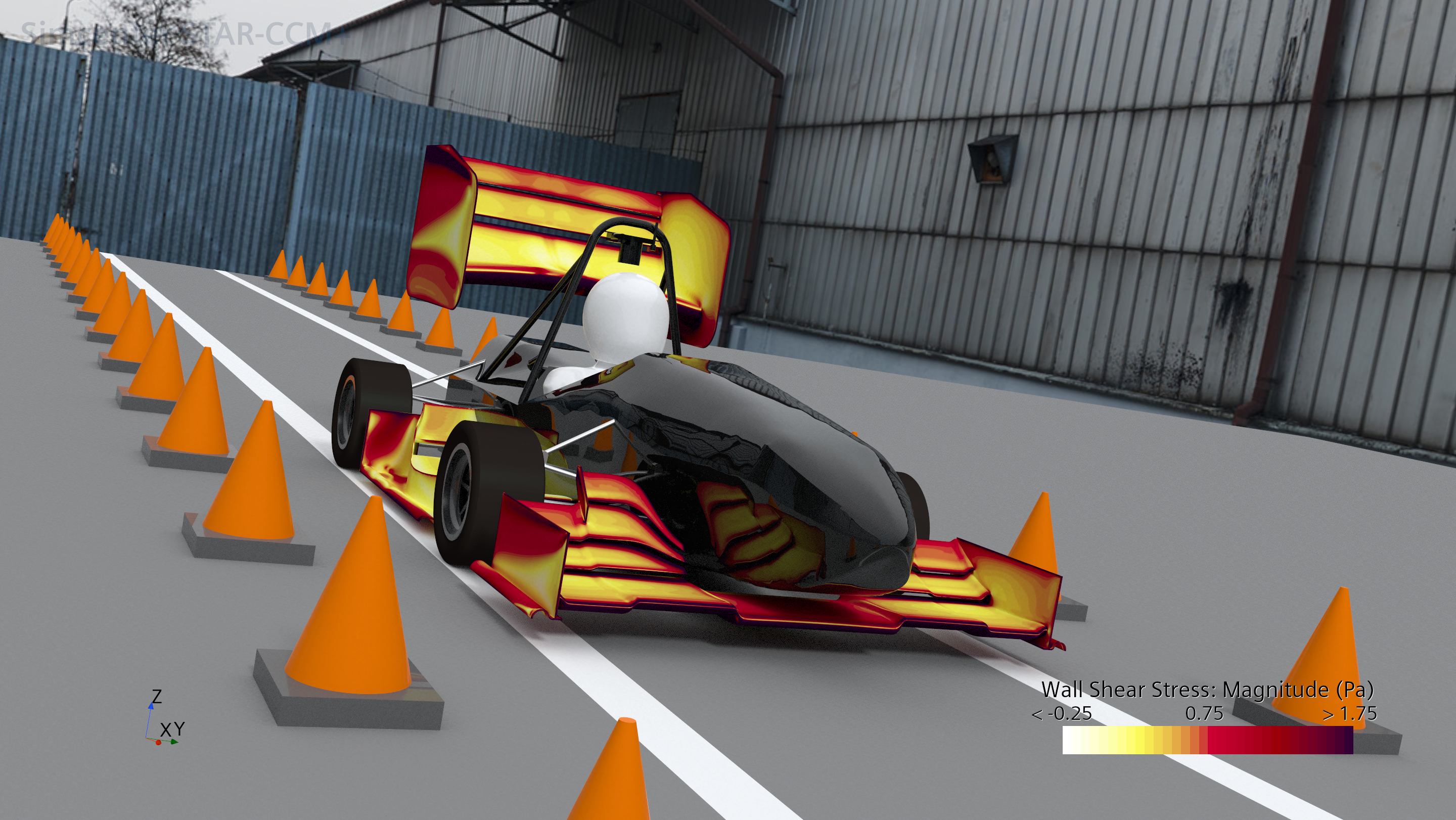
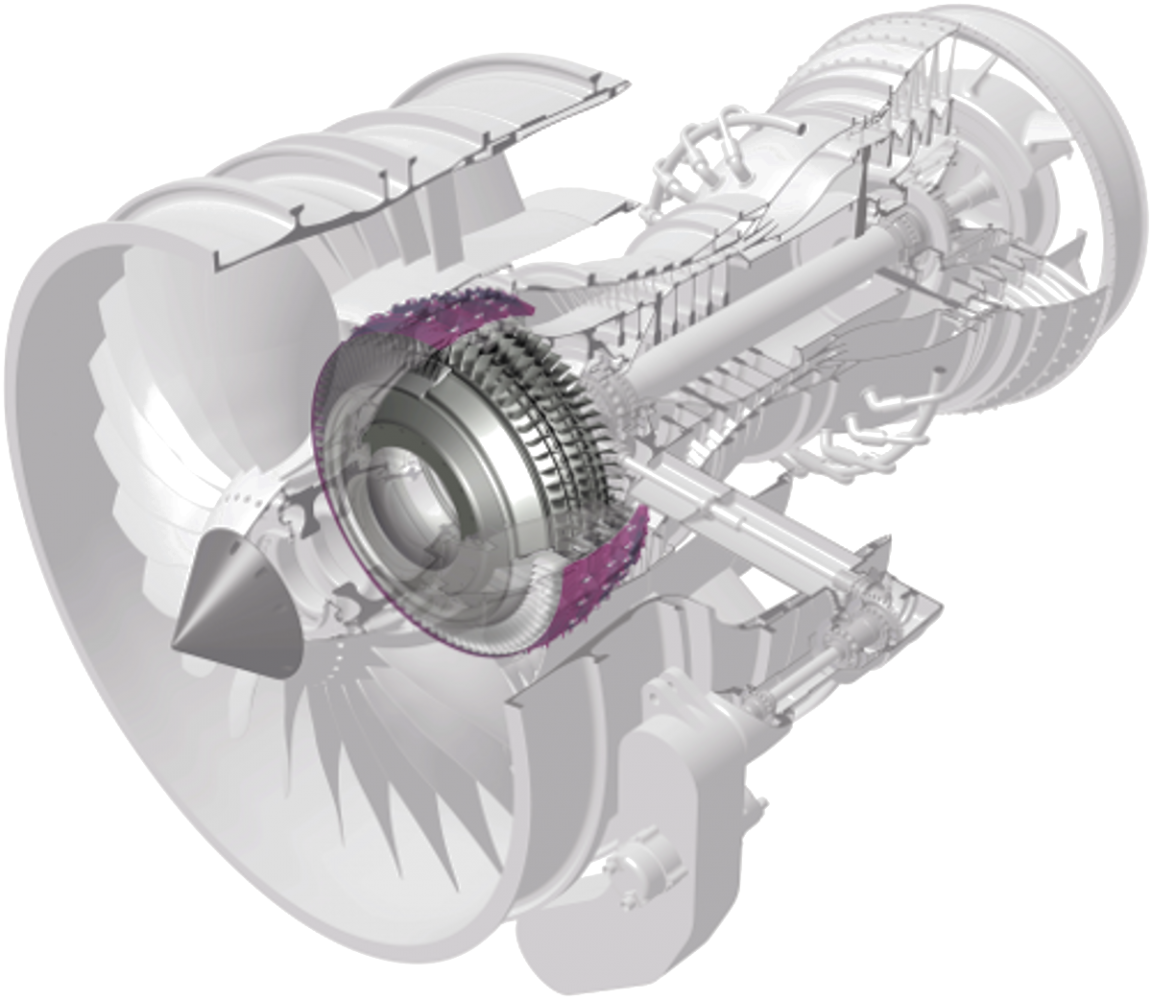
In aeronautics, every tiny boost in compressor design efficiency counts—for fuel use, emissions and performance. To explore the huge design space of Safran’s multi-stage compressor, Cenaero applied dimensionality reduction (UMAP + clustering) to cut parameter complexity. Using the Lucia supercomputer, they compressed an optimisation loop from weeks to ~36 hours, enabling rapid, AI-driven discovery of high-performance, manufacturable designs.

From Coarse to Crisp: Increasing the Horizontal Resolution of Global Ocean and Sea Ice Simulations

Picture of an ice bear by pexels
Climate models help scientists understand how Earth’s climate behaves and evolves—but many still lack the resolution to capture fine-scale ocean and sea ice processes. Dr. Antoine Barthélemy and his team at UCLouvain are closing that gap. With the power of LUMI, one of the world’s fastest supercomputers, they’re running high-resolution simulations using 4,480 cores in parallel—reducing decades of computation to just 45 days.

The Waffle Boys’ Journey: Friendship, Supercomputing, and Life Beyond Borders

Picture of Umut Cilesiz and Yiğit Ertan
Discover the inspiring journey of Umut Çilesiz and Yiğit Ertan, two Turkish chemistry students whose summer internship at the Vrije Universiteit Brussel sparked a passion for supercomputing. From adapting to life in Belgium to collaborating with international researchers, their story is one of growth, courage, and curiosity. Learn how stepping outside their comfort zone helped them gain lifelong skills—scientific communication, cross-cultural collaboration, and a fresh perspective on their future careers.

User Story Taming the Wind: Reducing Wake Uncertainty between Offshore Wind Farms with Supercomputing

Offshore Wind farm
Offshore wind energy is key to a sustainable future, but as turbines grow in number and size, so do the challenges of managing their wake effects. At the von Karman Institute for Fluid Dynamics (VKI), Wim Munters and his VKI Team Wind are tackling one of the hidden challenges of wind energy: how wakes from one wind farm can impact the performance of another—even many kilometers away. Using supercomputing, they are modeling these complex atmospheric interactions at scale. Learn how supercomputing is accelerating research, boosting efficiency, and helping Europe meet its offshore wind ambitions in this user story.

Pushing the Limits of Two-Phase Injectors with HPC

The two-phase injector

In the world of advanced cooling and heat transfer systems, two-phase injectors are gaining traction for their ability to efficiently mix vapor and liquid to enhance pressure recovery and energy efficiency. These systems, crucial in aerospace and industrial applications, depict the direct contact between a high-speed vapor jet and a subcooled liquid to induce condensation and improve performance.

Revolutionizing Great Barrier Reef Simulations with GPU Computing on LUMI

Coral_Reef_ Wiki_by Toby Hudson
The Great Barrier Reef, a natural wonder teeming with biodiversity, faces unprecedented challenges. Innovative solutions are crucial for its preservation. Researchers at UCLouvain have harnessed the power of GPU computing on the LUMI supercomputer to transform ocean modelling and conservation strategies. Prof. Emmanuel Hanert: “For the Great Barrier Reef, we use SLIM to simulate ocean currents and study reef connectivity —the exchange of living material between reefs. By modelling larval transport, we can determine how reefs are interconnected—identifying which reefs provide larvae to others. This insight is vital for conservation efforts, allowing us to prioritise protecting reefs essential for the resilience and regeneration of the entire ecosystem.”
Subscribe to User story