Our academic success stories, highlighting the value of HPC infrastructure and expertise for academic research in Belgium. If you want to share your story here, contact us!
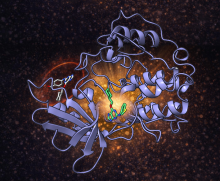
In our latest interview, we sat with Manon Mirgaux (ULB) and discussed how a new “competitive docking” method turns AlphaFold into a practical tool for pharma and academia
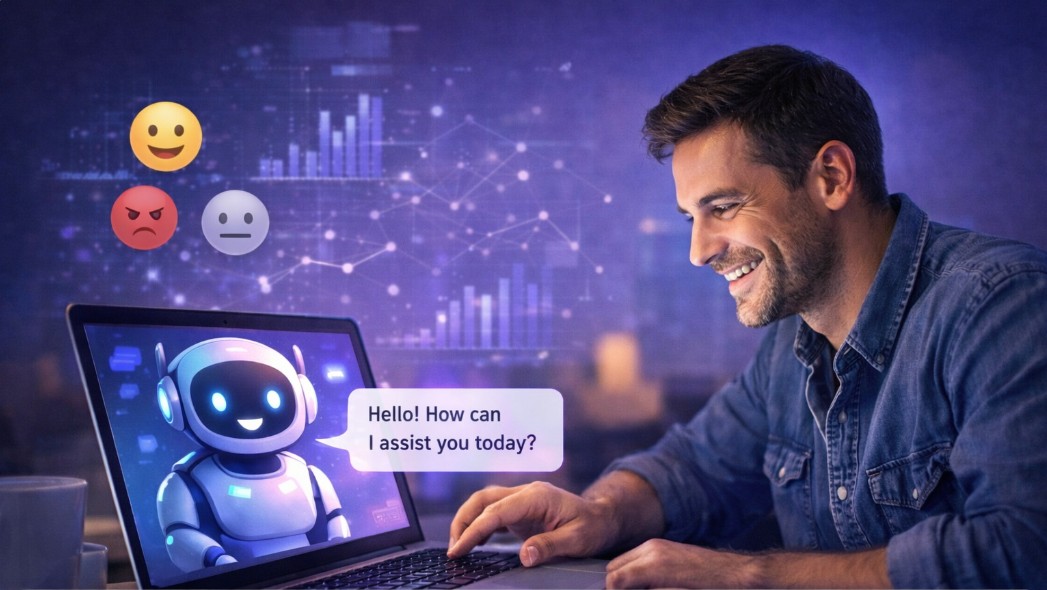
AI is everywhere - from chatbots to customer review analysis. But truly understanding human emotion remains one of its biggest challenges.
In our latest user story, Prof. Veronique Hoste (Ghent University, LT3) explains why language models often struggle with Dutch cultural nuance — and why emotion detection is more than just “positive” or “negative.”
Through the SentEMO project, her team developed aspect-based sentiment and emotion detection that gives companies deeper insights. A review like “The food was fantastic, but the waiter was rude” shouldn’t be labelled neutral — it should reveal what works and what doesn’t.
This research led to the spin-off Alfasent, proving how academic innovation can translate into real business value. Discover the full story!
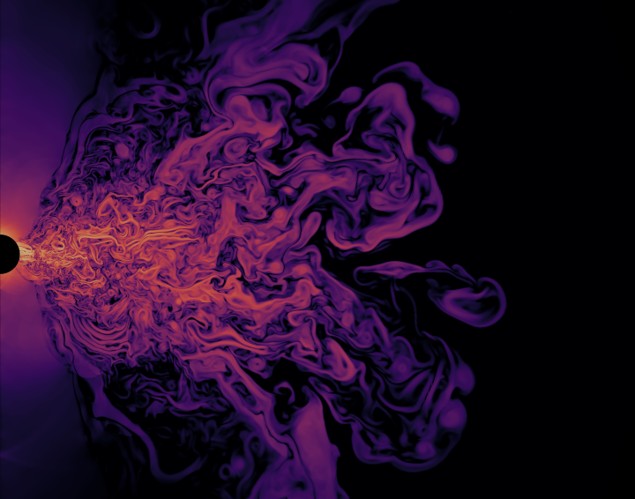
How do you study something that cannot be seen, touched, or directly measured? Black holes emit no light; yet the plasma around them does.
In this user story, Simulating the Invisible: How Supercomputing Advances Black Hole Research, we follow Prof. Fabio Bacchini (KU Leuven) as he tackles one of astrophysics’ biggest challenges: modelling the extreme plasma flows swirling around black holes. The work pushes simulations to their limits — combining particle-scale physics, strong gravity, turbulence and magnetic fields — and requires millions of CPU hours on Tier-1 and EuroHPC supercomputers.
What happens when you scale these simulations further?
What new physics emerges when plasma fragments into previously unseen structures?
And why is the shift to GPU computing becoming essential for the future of astrophysics?
Discover how high-performance computing is helping scientists simulate the invisible — and reshape our understanding of black holes: https://www.enccb.be/blackholeresearch"
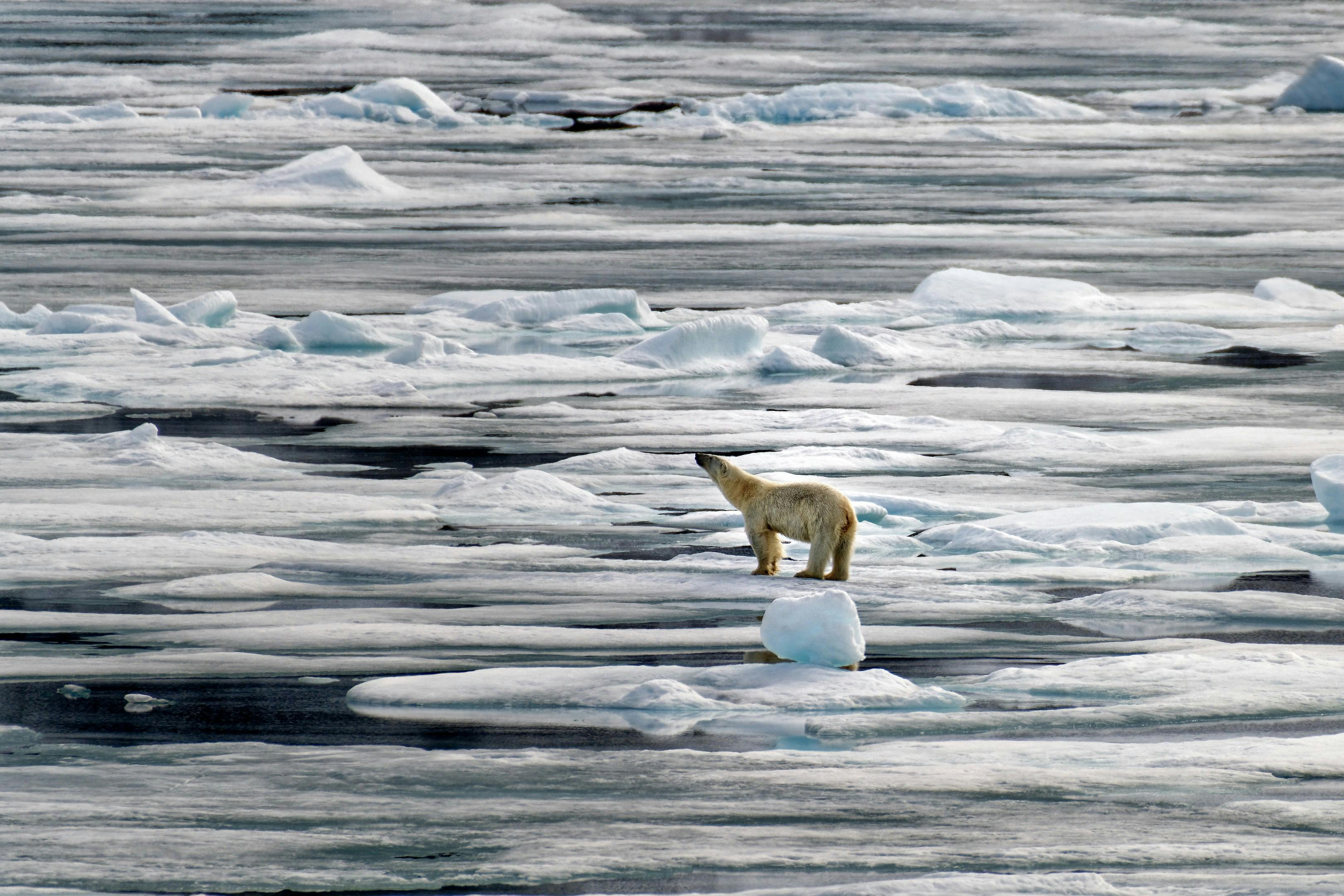
Climate models help scientists understand how Earth’s climate behaves and evolves—but many still lack the resolution to capture fine-scale ocean and sea ice processes. Dr. Antoine Barthélemy and his team at UCLouvain are closing that gap. With the power of LUMI, one of the world’s fastest supercomputers, they’re running high-resolution simulations using 4,480 cores in parallel—reducing decades of computation to just 45 days.
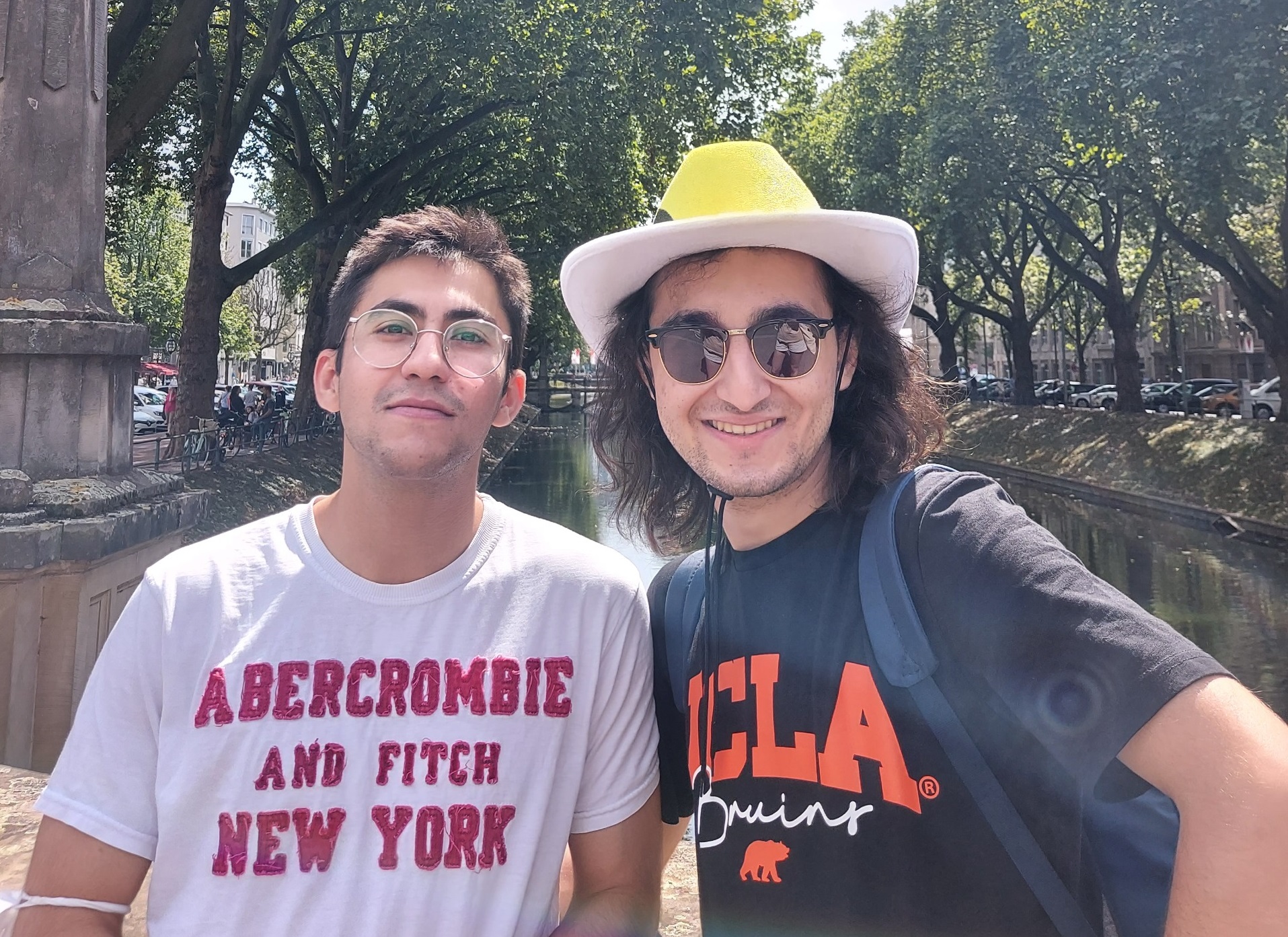
Discover the inspiring journey of Umut Çilesiz and Yiğit Ertan, two Turkish chemistry students whose summer internship at the Vrije Universiteit Brussel sparked a passion for supercomputing. From adapting to life in Belgium to collaborating with international researchers, their story is one of growth, courage, and curiosity. Learn how stepping outside their comfort zone helped them gain lifelong skills—scientific communication, cross-cultural collaboration, and a fresh perspective on their future careers.
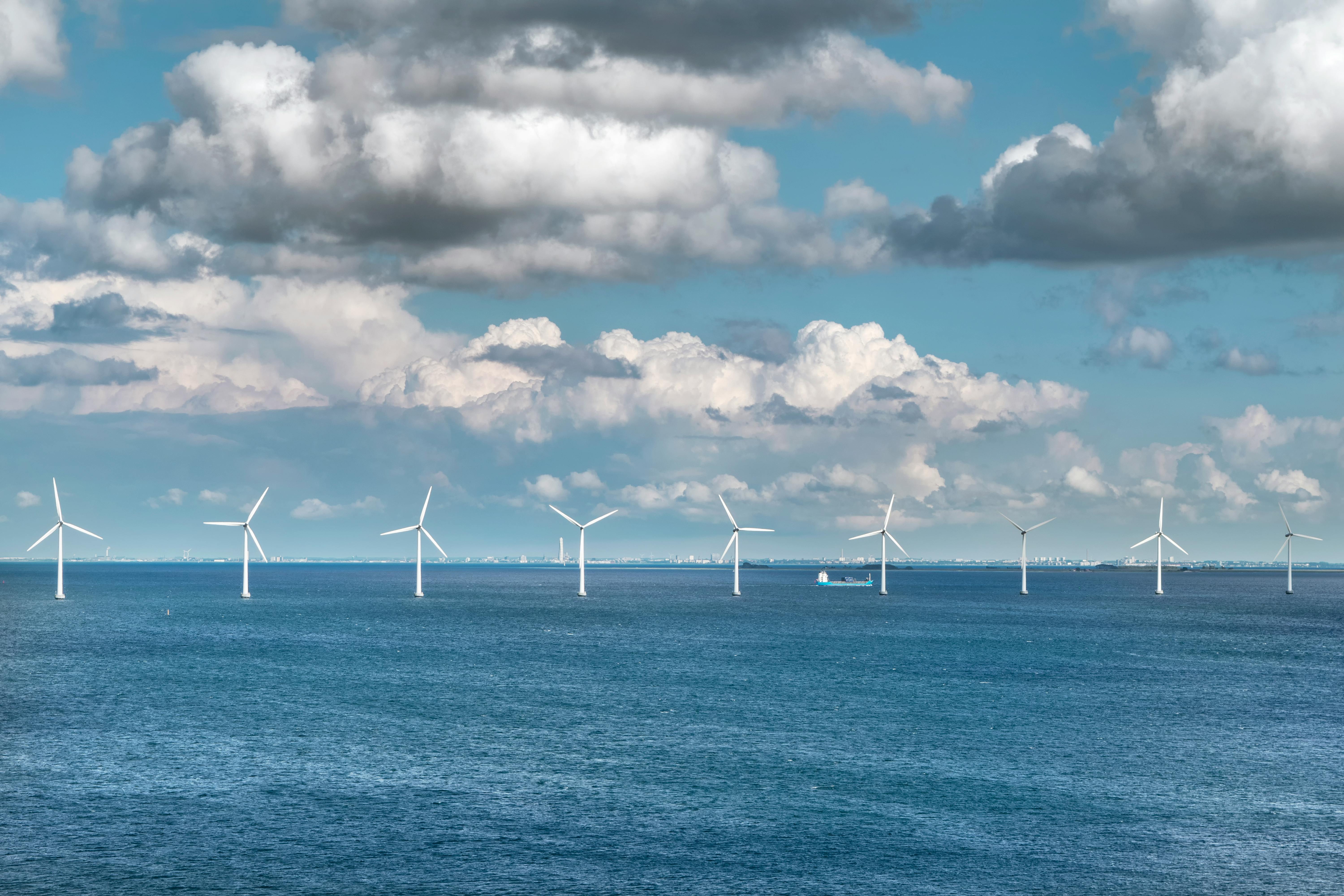
Offshore wind energy is key to a sustainable future, but as turbines grow in number and size, so do the challenges of managing their wake effects.
At the von Karman Institute for Fluid Dynamics (VKI), Wim Munters and his VKI Team Wind are tackling one of the hidden challenges of wind energy: how wakes from one wind farm can impact the performance of another—even many kilometers away. Using supercomputing, they are modeling these complex atmospheric interactions at scale. Learn how supercomputing is accelerating research, boosting efficiency, and helping Europe meet its offshore wind ambitions in this user story.
Turbulent flows are notoriously challenging in terms of modelling. Turbulence doesn't readily lend itself to simple, straightforward models. While the Navier-Stokes equations comprehensively describe the underlying physics, they come with a significant computational cost. In fact, attempting to simulate the full Navier-Stokes equations with all the complex physical details is (nearly) impossible. However, by introducing certain simplifications (Large Eddy simulations), we can leverage the power of supercomputing to create reasonably accurate models of turbulent flows.
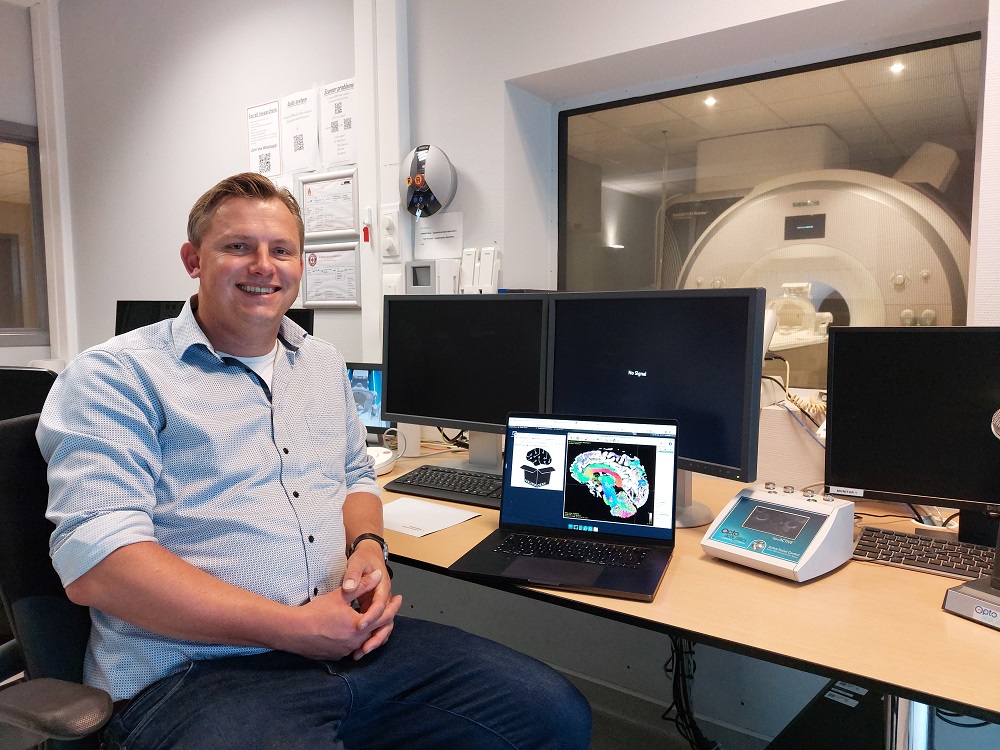
In this user story prof. Pim Pullens of Ghent University explains how supercomputing infrastructure and other tools are being used to teach students how to analyse imaging data.
Prof. Pullens: “As said, my students have no experience working with a supercomputer. However, thanks to using the VSC infrastructure, Open OnDemand and Neurodesk, I can get them to analyse their data within an hour, which shows how user-friendly and efficient this set-up is.”
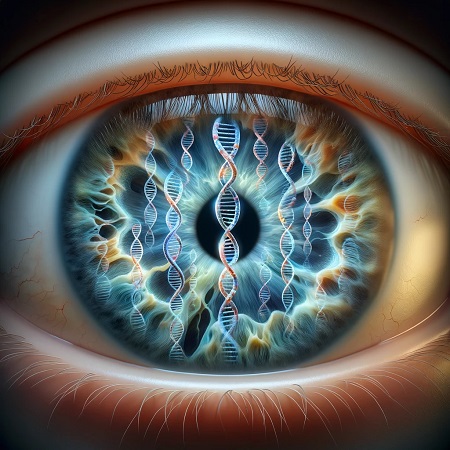
Learn how powerful computing supports the use of more advanced genetic testing to improve the diagnosis of rare eye diseases.
Mattias Van Heetvelde: “The Tier-2 infrastructure from the VSC allows us the use of significant (temporary) storage and compute resources at no extra cost and ensures our data is handled securely and efficiently. As a safeguard, all patient-derived sequencing data on the VSC infrastructure are pseudonymised, meaning the key to retracing the sequencing data to patient information is not kept on VSC infrastructure.”
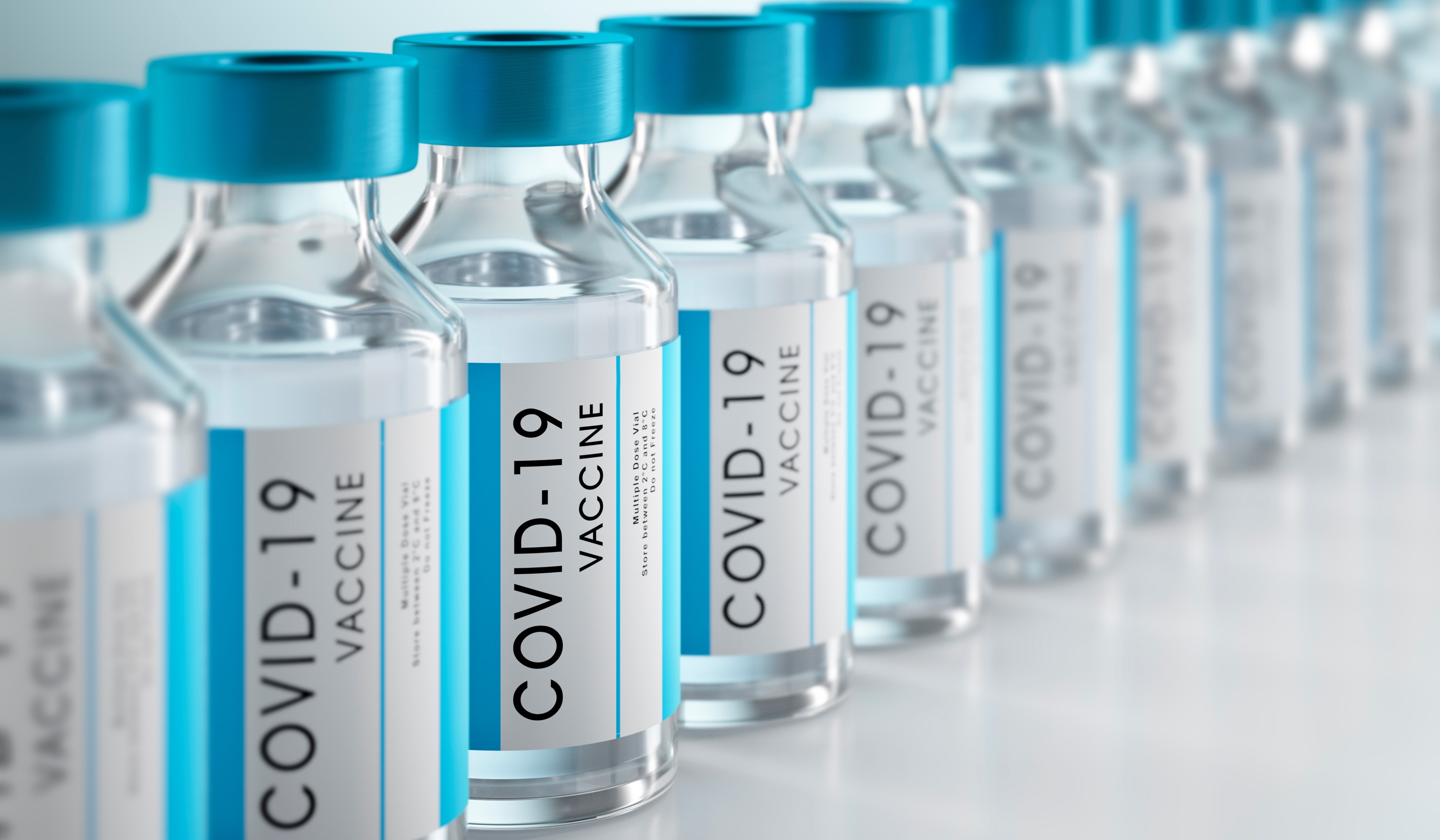
Discover how scientists from UHasselt, UNamur, and Sciensano are using advanced mathematical modeling to prepare for future pandemics. By analyzing data from the COVID-19 pandemic, researchers have developed a powerful tool to predict the spread of infectious diseases and assess the impact of interventions like vaccination campaigns. This groundbreaking work will equip us with the knowledge to tackle future outbreaks more effectively. Dive into this fascinating article to learn how these efforts are shaping the future of public health preparedness.